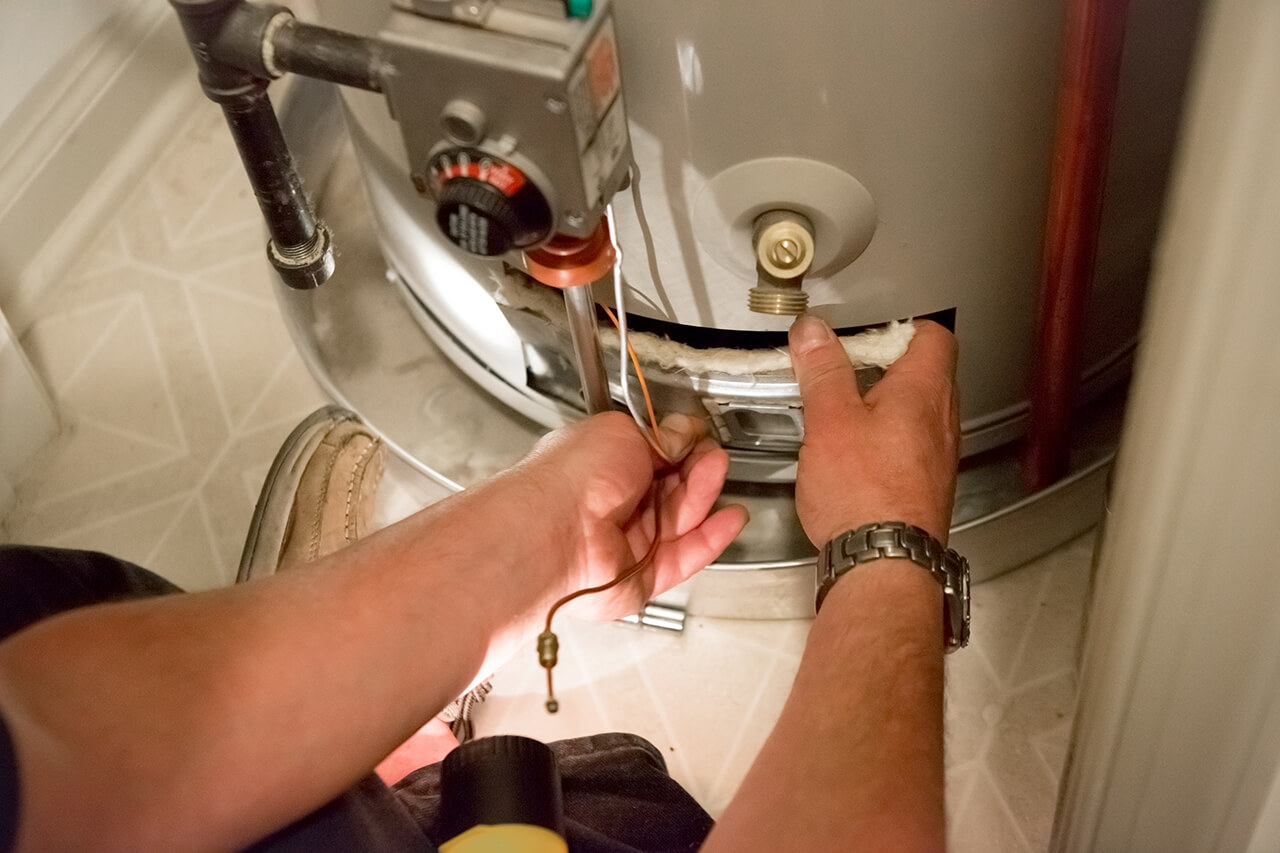
Use this guide to budget for water heater repair costs based on factors such as heater type, repair issue, parts, labor, and more.
Water heater replacement costs $1,339, though most homeowners pay between $882 and $1,817 depending on the type your pro installs.

Traditional tank-style water heaters are the least expensive, while tankless styles are pricier upfront but offer improved energy efficiency.
The water heater’s tank size greatly influences its cost.
Labor makes up around 50% of the total project budget.
You can reduce costs by repairing whenever possible, insulating the tank and pipes, and replacing your old heater with the same fuel type.
This article was updated using automation technology and thoroughly reviewed for accuracy by HomeAdvisor Editor Ryan Noonan.
The cost to replace a water heater ranges from as little as $350 to as much as $12,000 when factoring in labor and the unit itself. However, most homeowners pay an average of $1,339 to replace a water heater. This price varies depending on the type of water heater you choose, the unit’s size, the fuel type, and whether you’re relocating it from its prior location. Whether you're swapping out an old unit or upgrading to a more efficient model, knowing what to expect can help you budget and plan for a smooth installation.
Several factors influence your water heater replacement cost, including the unit type, size, fuel source, and brand.
There are several types of water heaters, each with its own advantages and drawbacks. The type you choose will significantly affect your replacement cost.
| Type of Water Heater | Description | Average Cost to Install |
|---|---|---|
| Tank | Traditional water heater that stores hot water in a tank | $600–$2,500 |
| Tankless | Heats water on demand rather than storing it | $1,400–$3,900 |
| Gas | Heats water with natural gas | $700–$2,700 |
| Propane | Heats water with propane | $700–$2,500 |
| Electric | Uses a powered element to heat water | $600–$3,500 |
| High-Efficiency | Uses power more efficiently to reduce energy bills | $1,500–$3,000 |
| Indirect-Fired | Heats water with a coil for reduced maintenance and cost | $1,200–$3,500 |
| Hybrid Heat Pump | Uses geothermal or heat pump technology to heat water | $1,200–$3,500 |
| Solar | Heats water using solar power from connected panels | $1,700–$5,500 |
The size of your new water heater is another major factor in the cost. Depending on your household’s hot water needs, you might need a larger tank, which can increase the replacement cost. Tank sizes range from 20 to over 100 gallons, with 40-gallon tanks being the most common.
| Tank Size (Gallons) | Average Price Range |
|---|---|
| 30 | $700–$2,100 |
| 40 | $800–$2,300 |
| 50 | $800–$2,500 |
| 75 | $1,100–$4,000 |
| 80 | $1,300–$7,500 |
The cost of your new water heater can increase significantly depending on its fuel type, especially if your home needs new infrastructure to support it. Natural gas, propane, and electric heaters all start at about $600 for basic models. High-end electric water heaters can cost up to $3,500, not including installation or electrical work.
Propane and natural gas water heaters can save you money on your utility bill but cost more upfront than an electric unit if you don’t have the necessary gas lines installed. Paying to run gas or electricity to a water heater after switching fuel types significantly increases the cost. This should be considered when calculating the energy savings of a new type of water heater.
Upgrading to a more energy-efficient water heater is a great way to lower your monthly utility bills, and the unit can eventually pay for itself over time. However, these efficient models come with a higher upfront cost, especially if you're considering options like solar or geothermal-powered units. High-efficiency electric units start around $1,500, larger ones can cost about $3,000, and solar water heaters cost up to $5,500.
The brand you choose for your water heater affects your replacement cost. Some brands are more expensive to maintain, which is important to consider when estimating future water heater repair costs.
| Water Heater Brand | Average Cost Range |
|---|---|
| Rheem® | $600–$2,300 |
| A.O. Smith® | $800–$3,500 |
| Bradford White® | $400–$3,000 |
| Kenmore® | $350–$1,000 |
| Whirlpool® | $350–$1,500 |
The water heater’s location in your home adds a fair amount to the final installation cost. If your local water heater installer needs to move the unit up and down several flights of stairs or into a tight area, this will increase the labor costs of water heater installation.
Beyond the basics, there are a few extra costs of replacing a water heater you should consider when budgeting. These include labor costs, permits, and if you’re replacing or relocating a unit.
Labor accounts for a significant portion of your water heater replacement cost—about 50% of the total. You'll likely need to hire both a plumber and an electrician. Plumbers typically charge between $45 and $200 per hour, while electricians charge between $50 and $100 per hour.
For labor alone, expect to pay between $150 and $450 to replace a tank-style water heater, between $600 and $1,900 for a tankless water heater, and between $150 and $2,500 to convert a tank-style system to a tankless one.
Depending on the amount of work required and the local rules about work permits, you’ll pay between $25 and $300 for a permit to replace your water heater. This covers the permits needed to install a gas appliance or to alter plumbing and electrical systems. If you need to connect your new water heater to natural gas, you’ll need a special permit, which can cost another $50 to $300.
Electric water heaters usually don’t need venting. However, propane or natural gas water heaters require direct venting or powered venting, which can impact your final costs. Direct-vent heaters work with passive venting, meaning no extra electricity is needed for the air exchange. If you opt for a power-venting system, you can expect to pay $600 to $1,100 more for the power-vent unit and the necessary electrical work.
Water expands when it freezes or heats up. If the water heater system isn’t properly set up for this expansion, it can cause serious damage to your plumbing and home. To avoid this, many homeowners add an expansion tank to take the pressure off the system. This usually adds between $90 and $350 (plus additional labor) to the cost of replacing a water heater.
If you need to relocate your water heater, expect costs between $150 and $3,400. The price depends on the complexity of the move and whether new electrical lines, gas supply, or ductwork need to be installed at the new location.

Most homes use a tank-style water heater, which stores a certain amount of water in a built-in reservoir and keeps it constantly heated for use in the home. However, many homeowners are switching to tankless water heaters, which heat water on demand so you never run out of hot water.
Tank water heater systems come in a range of sizes—between 20 and 100 gallons—and are quick and relatively inexpensive to install. Depending on their size, fuel type, and brand, the units range between $600 and $2,500.
Tankless water heaters cost around $1,400 to $3,900 for the unit and installation. This is more expensive in the short term, but tankless water heaters offer superior energy savings over their lifespan. However, tankless water heaters cost more to repair and maintain. Unlike a tank water heater repair, which costs between $100 and $500, repairing a tankless system costs between $100 and $1,300, depending on the issue.
Since a new water heater can cost thousands, it’s wise to consider repairing your existing unit before buying a new one. Depending on the issue and your unit type, a repair could cost as little as $100 or up to $1,300. The good news is that water heater repairs are often simple and inexpensive. For example, replacing a faulty gas valve—a common repair—costs between $150 and $500.
A tank-style water heater lasts six to 15 years with regular maintenance. If your unit is older than that, it might be time to consider replacing it. Tankless water heaters last longer—20 years or more when cared for properly.
If you notice any of these issues, call a water heater professional to determine whether your unit needs to be repaired or replaced:
Discolored water from taps
Water only getting tepid or lukewarm
Metallic taste in water
Unexplained rising utility costs
Water leaking or pooling below your water heater
Loud, unusual noises coming from the water heater (e.g., banging, popping, grinding, rumbling)
Frequently running out of hot water with normal use
Consult a local water heater professional to determine the best option for your home.
Installing a conventional tank-style water heater might not significantly boost your home's value, but it does offer peace of mind knowing you won't need a replacement or major repairs anytime soon. While these units have a limited ROI regarding home value, they ensure reliable hot water for you and potential buyers.
On the other hand, installing a more advanced water heater, such as a tankless system, can greatly increase your home’s value thanks to its energy savings and long lifespan. Tankless water heaters can be 24% to 34% more energy efficient than a tank system, which makes them a great way to boost home value.
Replacing your water heater is inevitable if you own your home long enough. Here are a few ways you can reduce the cost when the time comes:
Whenever possible, repair your water heater instead of replacing it. Even the most expensive repairs cost less than replacing the unit.
Save money on utility hookups by using the same type of fuel source for your new water heater. If you’re already using an electric heater, the project will cost less if you install another electric unit rather than a propane or natural gas-powered one.
Consider future energy savings and balance them against upfront costs to make the overall best financial decision.
Look into local discounts, rebates, and incentives for energy-efficient water heaters to help offset the costs of more expensive units.
Make sure your heater and pipes are well-insulated to improve energy efficiency and reduce expensive heat loss.
No place is more important than your home, which is why HomeAdvisor connects homeowners with local pros to transform their houses into homes they love. To help homeowners prepare for their next project, HomeAdvisor provides readers with accurate cost data and follows strict editorial guidelines. We surveyed over 30,000 real customers about their project costs to develop the pricing data you see, so you can make the best decisions for you and your home. We pair this data with research from reputable sources, including the U.S. Bureau of Labor Statistics, academic journals, market studies, and interviews with industry experts—all to ensure our prices reflect real-world projects.
From average costs to expert advice, get all the answers you need to get your job done.
Use this guide to budget for water heater repair costs based on factors such as heater type, repair issue, parts, labor, and more.

Learn who to call for HVAC inspection. Discover which pro to hire, what to expect from an HVAC inspection, and average costs for your home.

Learn our top tips for finding and hiring an electrician you can count on!

HomeAdvisor's Lighting Repair Cost Guide lists price information on fixing a light or light fixture, as reported by HomeAdvisor customers.

Use this guide to budget for an upcoming plumbing inspection cost based on factors such as home size, inspection type, labor, and required repairs.

Explore how factors such as materials, local labor rates, and the type of damage affect the cost to repair a burst pipe.