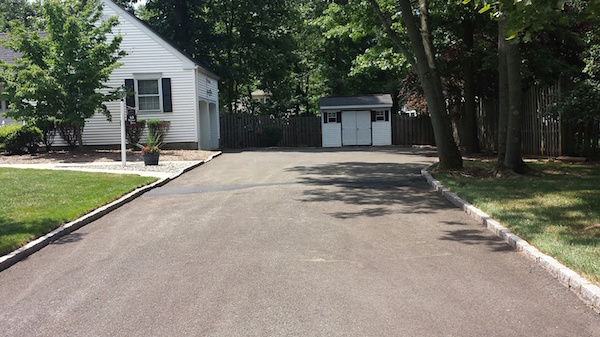
Paving problems are more common than most homeowners realize. If installed correctly the first time, your driveway, walkway, and patio pavers should last many, many years. But proper installation is far from a given and exposure to the brutal elements can cause problems for virtually any residential paving. Some homeowners mistakenly believe they are avoiding paving problems by choosing the convenience of loose fill, but the truth is loose fill is vulnerable to many of the exact same problems as other pavers:
Loose Fill Paving Problems
- Washboarding resembles the bumpy surface of an old-fashioned wash board. You can often find this phenomenon on unpaved dirt roads.
- Potholes are holes in pavement found in virtually all materials. Usually, potholes are caused by natural freeze-thaw cycles.
- Similar to potholes, a trough is a long indentation found in pavement.
- General erosion: All pavement will erode from climate effects and use.
- Water pooling is often caused by an unstable subsurface sinking over time.
- Grading/slope problems are possibly due to improper site preparation and can turn into potholes over time.
Coping with Paving Problems: Loose Fill Repair
The good news about loose fill and loose fill paving problems is that they’re usually easier to deal with than more permanent pavers. Still, sealing cracks and/or putting down new loose fill is only a temporary stop gap and may not last more than a few days, depending on the nature of the problem. If cosmetic repairs don’t take, you probably need to rework the substrate layers of soil and bedding beneath your loose fill.
Of course, the most effective and permanent solution to almost any loose fill problem is to hire a contractor to install more conventional brick, stone, or asphalt paving. Even removing old loose fill and reworking the ground beneath the fill is beyond most DIYers, anyway. According to data collected by HomeAdvisor from across the country, the average cost for asphalt paving is $4,704 and brick or stone paving is $5,118. If you’re happy with the idea of loose fill but need some professional help to return your driveway or walkway to its original condition, you might be able to get the job done for $1,000 or less.
Ready to start your loose fill paving?
Find ProsOther Paving Problems
Asphalt and Poor Ground Preparation: Any preexisting paving, gravel, and topsoil must be removed before your new paving starts. Otherwise, grass and weeds will continue to grow underneath the paving and push it up entirely, sometimes in short order. Asphalt, which traps heat and moisture, is particularly susceptible to this problem.
Brick Pavers and Freeze/Thaw Cycles: Also a problem with loose fill and stone pavers, the tight set and proximity to the ground makes brick particularly susceptible to water infiltration. Even the smallest imperfections in the joints can let water get underneath your brick. Then, when winter freezes, spring thaws, and cracks and holes are the result. If you live in a warmer climate, water infiltration will still cause general soil erosion.
 Concrete Resurfacing – Process & Options
  How to Protect Your Driveway
  Asphalt Paving
  Stone and Gravel Driveways
  Green Driveways, Patios, Walkways, & Floors

Are You Familiar With This Topic? Share Your Experience.